
Kenya has over 12,000 registered pharmacies — but walk into most of them and you are stepping into a business model that has not changed in 30 years. A counter, a shelf full of medicines, a handwritten prescription log, and a pharmacist who knows their regulars by name.
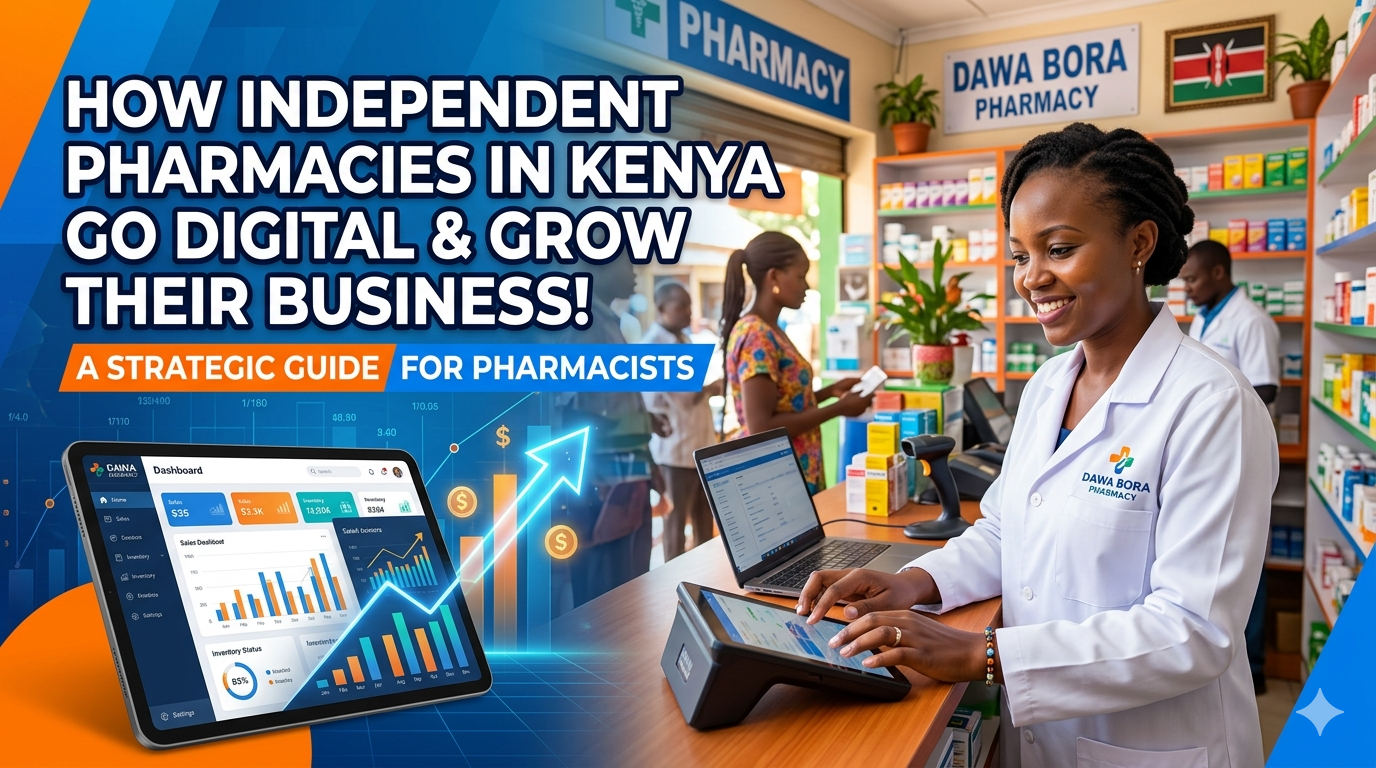
That personal relationship is a genuine competitive asset. But it is no longer enough.
Large pharmacy chains are expanding aggressively into tier-2 and tier-3 towns. E-pharmacy platforms are attracting urban customers with delivery convenience and discounts. Insurance-linked pharmacies are capturing the formal employment segment. Independent pharmacists who do not adapt will lose market share steadily — not in a dramatic collapse, but in the slow erosion of customers who find a more convenient option.
The good news is that going digital does not require a large budget or a technology background. This guide gives you a practical, step-by-step path to building a digital presence that brings more customers to your counter and builds the kind of trust that keeps them coming back.
Why Independent Pharmacies Have a Natural Digital Advantage
Before we get into tactics, it is worth understanding what you already have that chains do not.
Community trust. You know your customers’ medical histories, their family situations, and which brands they respond to. That context is worth more than any algorithm.
Flexibility. You can stock niche products, offer personalized counseling, and make exceptions that chain pharmacies cannot.
Local relationships. You have built-in referral networks with local clinics, doctors, and community health workers that a new chain pharmacy cannot replicate overnight.
Digital tools do not replace these advantages — they amplify them. When a new patient searches “pharmacy near Kitui” and finds nothing, your competitor gets that customer instead. Going digital means ensuring your existing strengths are visible to people who have not met you yet.
Step 1: Build a Professional Brand Identity
Your pharmacy name is the foundation of every digital touchpoint — your Google listing, your WhatsApp business profile, your Facebook page, and eventually your website. If your current business name is generic or hard to search for, this is the right time to address it.
An effective pharmacy brand name should be:
- Easy to pronounce and spell in Swahili and English
- Distinct enough to avoid confusion with nearby competitors
- Memorable for patients who need to refer others
Many pharmacists have found that using an AI business name generator helps unblock the creative process — generating dozens of name combinations in seconds that would otherwise take days of brainstorming. You can filter by sound, meaning, and domain availability, and even generate a logo concept alongside the name.
Once you have a shortlist of names, checking how many similar businesses exist in your area and category is equally important. A name that sounds unique in your head may already be used by five other health businesses in your county. Tools that check name similarity and market saturation give you that data before you commit to printing signage or registering your business identity.
Step 2: Create a Simple Pharmacy Website
You do not need a complex, expensive website. A simple five-page site is enough to establish digital credibility. Your pages should include:
- Home — what you offer and where you are located
- Services — prescription dispensing, chronic disease management, health screenings, delivery (if applicable)
- Products — featured categories (family health, maternal health, diabetes management, etc.)
- About — your credentials, years of experience, and what makes your pharmacy different
- Contact — phone number, WhatsApp link, Google Maps embed, and operating hours
Domain and hosting: Register a .co.ke domain (typically KES 1,500–2,000/year) and use affordable hosting services like Hostinger or Safaricom Cloud. Total investment: under KES 10,000 per year.
The step most pharmacists miss: Once your website is live, search engines like Google cannot automatically discover every page — especially on new sites. You need to create a sitemap (an XML file that tells Google which pages exist and how they are structured) and submit it to Google Search Console. Skipping this means your website may sit invisible in search results for months.
A free sitemap generator creates this file for you in minutes without any coding knowledge. Submit it once, and Google begins properly indexing your pharmacy website — which is the foundation of appearing in local searches.
Step 3: Optimize Your Google Business Profile
This is the single highest-return digital action any Kenyan pharmacist can take — and it is completely free.
When someone in your area searches “pharmacy” or “chemist near me,” Google displays a map with three local businesses. That “local pack” drives enormous foot traffic. Getting into it requires a verified and optimized Google Business Profile.
Steps to set up your profile:
- Go to business.google.com and search for your pharmacy name
- Claim your business or create a new listing
- Verify via postcard or phone call (Google sends a PIN to your registered address)
- Complete every field: hours, services, medicine categories, phone number, WhatsApp link
- Upload at least 10 photos — exterior, interior, shelves, staff
Ongoing maintenance:
- Request reviews from satisfied patients (a simple WhatsApp message works: “Thank you for visiting us. A Google review helps us help more patients in our community.”)
- Respond to every review — positive and negative
- Post weekly updates (health tips, new product arrivals, seasonal health alerts like malaria prevention during rains)
Pharmacies with complete profiles and regular review activity appear significantly more often in local searches than those with empty or unverified listings.
Step 4: Use WhatsApp Business as Your Customer Service Channel
Over 90% of Kenyan smartphone users are on WhatsApp. Your customers are already there — you need to be there professionally.
WhatsApp Business (free app) gives you:
- A business profile with your pharmacy name, logo, hours, and address
- Catalogue feature to display products and prices
- Automated greeting messages for new contacts
- Quick reply shortcuts for common questions
- Broadcast lists to send health tips to opted-in customers
Use broadcast lists to send monthly health reminders: “Malaria season is approaching — we have ACT medicines in stock,” or “World Diabetes Day is November 14th — visit us for a free blood sugar check.” These messages are genuinely useful to recipients and keep your pharmacy top of mind without feeling like spam.
Step 5: Register on Supplier and Distributor Portals Strategically
As you grow your pharmacy, you will register on multiple pharmaceutical distributor portals, supplier platforms, and medical information databases to access better pricing, new products, and industry updates.
The challenge: every registration floods your inbox. A single supplier platform registration can trigger daily promotional emails, price list updates, and marketing newsletters that bury the genuinely important supplier communications you need to act on.
A practical approach many pharmacy owners use is to use a disposable email address when signing up for exploratory registrations — platforms they want to evaluate but are not sure they will commit to long-term. This keeps your primary business inbox reserved for confirmed supplier relationships, PPB communications, and patient inquiries that require timely responses.
For your primary suppliers and regulatory bodies (PPB, KEBS, KRA), always use your official business email. The inbox discipline this creates makes a real difference as your pharmacy network grows.
Step 6: Source Quality-Assured Medicines from Local Manufacturers
Your digital presence attracts patients. What keeps them is the quality and consistency of your products.
The biggest mistake independent pharmacists make is defaulting to the cheapest supplier without verifying quality credentials. Counterfeit and substandard medicines are a documented problem in Kenya’s supply chain — and the pharmacist is legally and reputationally liable when a patient gets a product that fails.
When evaluating local pharmaceutical manufacturers, look for:
- PPB-issued GMP certification (request the current certificate, not just a claim)
- Batch testing documentation (Certificate of Analysis for each batch you purchase)
- Clear product recall and adverse event reporting procedures
- Stability data for products requiring cold chain management
Working with GMP-certified local manufacturers like Comet Healthcare gives you the dual advantage of quality assurance and shorter supply chains — meaning faster restocking and less exposure to the counterfeit risk that enters through long international supply routes.
Step 7: Track What Is Working
Digital marketing without measurement is guesswork. You do not need sophisticated analytics — start with three simple tracking habits:
New customer source: When a new patient walks in, simply ask “How did you hear about us?” Track the answers weekly. Within a month, you will know whether Google, WhatsApp, referrals, or signage is driving new business.
Google Business insights: Your Google Business Profile dashboard shows how many people searched for your pharmacy, how many clicked for directions, and how many called directly from your listing. Review this monthly.
WhatsApp engagement: Track which broadcast messages generate responses or walk-ins. Health tips about current seasonal conditions (malaria, flu, typhoid) typically outperform generic promotions.
The Independent Pharmacy’s Digital Window Is Open — But Not Forever
The next three to five years will determine which independent pharmacies in Kenya survive the expansion of chain and e-pharmacy competitors. The pharmacies that act now — building digital visibility while they still have brand equity and community trust — will capture the digital-first patients that chains are competing for. Those who wait will find the window significantly smaller.
Going digital does not mean abandoning what makes your pharmacy special. It means ensuring the people who need what you offer can actually find you.